

By Aadya Bommineni and Hansika Senthil
Happy Navratri! Navratri is a nine-day long festival to celebrate the illustrious mother goddess Durga and her nine avatars, and each day has its own signficance and story. Want to learn more? Read our new info section for this month!
Day 1
On the first day of Navratri, we celebrate the mother goddes, the avatar of Shailputri, or Parvati. When Sati Devi, Lord Shiva’s first wife, was immolated after hearing her father disrespect her consort, she promised to return to her husband when she reincarnated with better parents. In her next life, Sati Devi was born to the king of the Himalayas, King Himavat, as Shailputri, who remember her past life and carried the connection to Lord Shiva, which she desired to refound in her new form. She is depicted sitting on her mount, Nandi the bull, symbolizing dharma and staying humble and disciplined, holding a trishula to represent autonomy, and a lotus for purity. In most celebrations of the first day of Navratri, devotees wear orange to represent enthusiasm and warmth.
Day 2
Brahmacharini is the second avatar of the Navadurga, embodying spirituality and peace in her journey to reunite with Lord Shiva’s by participating in intense penance and meditation. She is showcased wearing a simple sari and no accessories, holding a water pot and a rosary necklace, and this avatar represents the strength behind spiritual penance and devotion. This day is associated with the color white, connecting to the spiritual peace and serenity of the goddess.
Day 3
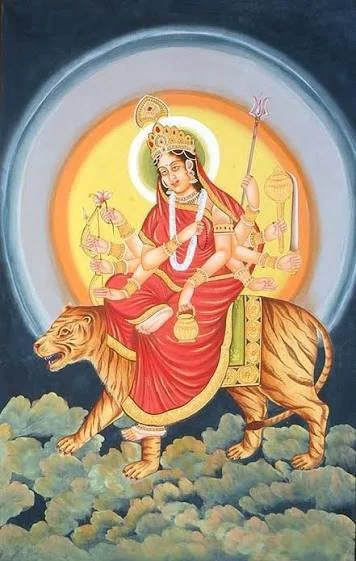
After long meditation and penance, goddess Brahmacharini wins Lord Shiva’s respect with her devotion, and she marries him in the avatar of Chandraghanta, symbolizing pure energy and nature. She is depicted sitting on a tiger/lion, carrying weapons, a bell, pot, and a lotus, all respresenting raw strength and energy, and her ferocity shows courage and the constant fight for justice. The color for the third day of Navratri is red, enhancing ideals of strength and power portrayed by the goddess.
Day 4
The fourth day of Navratri celebrates goddess Kushmanda, who is said to reside within the Sun, and when she smiled, her energy lightened the Sun and created the universe. This symbolizes that all beings have an inner core energy that they can spread kindness to everything around them. Her vahana is a tiger/lion and she holds a rosary, cosmic weapons, a chakhra, and water pot, and the color worn by devotees on this day is royal blue, invoking peace and prosperity.
Day 5
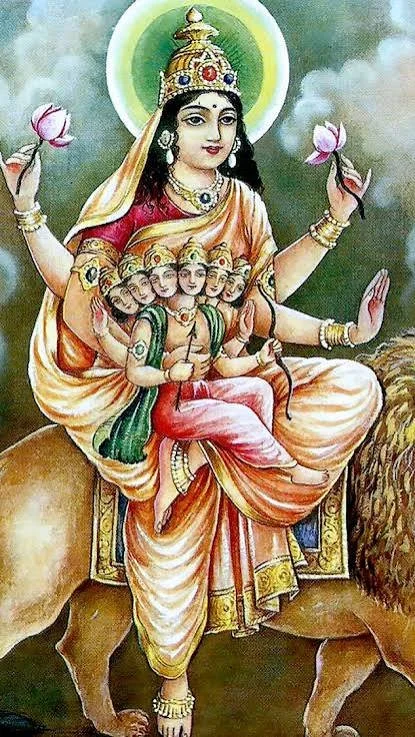
The main mother avatar worshipped during Navratri is Skandamatha, the mother of Lord Karthikeya, representing maternal warmth, a mother’s devotion to her child, and their ability to go to unthinkable measures to protect them. She is depicted seated on her vahana, a tiger/lion, holding her son Karthikeya, and holds a lotus for purity, and she is celebrated by devotees wearing the color yellow to showcase optimism and spiritual energy.
Day 6
On day six, goddess Kathyayini is celebrated, and she is known as warrior representing female empowerment and strength when she destroyed the demon Mahishasura, who vowed that he would only be killed by his mother, and so the mother goddess herself came and killed him. She is associated with the color green and shown holding a sword symbolizing ferocity and a lotus for nature and elegance.
Day 7
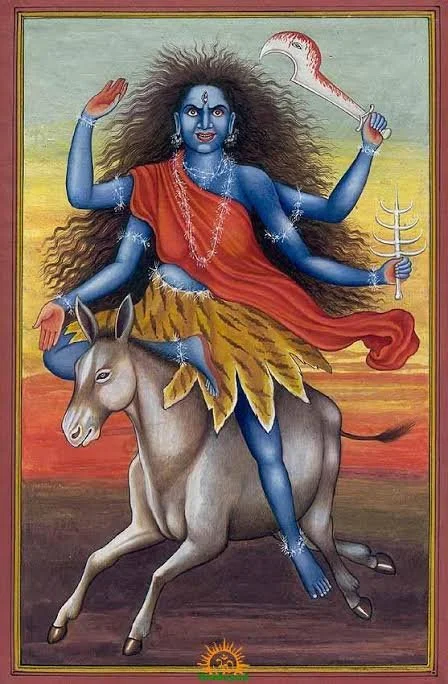
The seventh day of Navratri surrounds Kaalraatri, a dark-complexioned ferocious goddess who is characterized by her three eyes, disheveled hair, four arms, and her mount; a donkey and/or mule. Kaalraatri is depicted in a red-colored attire (or tiger skin) which is believed to represent prayer and assurance of the goddess’s protection to the devotees from harm. In terms of the celebration itself the color worn for this day by devotees is grey, among other traditions that are observed.
Day 8
The goddess who was worshipped the previous day, Kaalraatri, is believed to have taken a bath in the Ganga river where she gained a warmer, softer complexion. This form of devi takes on a far more gentle appearance than the fury of Kaalraatri, in fact, her name itself means “extremely fair and bright” (maha meaning great or supreme, gauri meaning clean/white). She is adorned in pure white garments, symbolizing peace, intelligence, purity, and the removal of sins. This optimism is reflected in the devotees through the color of the day, pink or white attire. Observers of this day of Navraatri offer pure white jasmine flowers, fruits, sweets, etc. when conducting a puja of devotion.
Day 9
Siddhidatri is worshipped on the ninth and final day of Navratri. She is the ninth form of Goddess Durga and is known as the goddess of supernatural powers, wisdom, and spiritual fulfillment. She is usually depicted sitting on a lotus and holding a conch, discus, mace, and lotus flower. Her devotees typically worship her on this day to seek blessings, knowledge, strength, and success. Her worship represents the completion of Navratri and the triumph of divine energy and goodness over all evils. The attire color of this day is purple, particularly because it portrays an admiration towards nature and its beauty.
