

Featured Paintings
By Aadya Bommineni, Shriya Shaji, Hansika Senthil, and Pehal Thacker
This month, we feature artwork from youth artists Praanya, Varsha Subramanian, and Meera Sankar, whom each portray the spirit of Lord Ganesha uniquely, in various avatars and environment.
Hasti Alaya
Praanya
Fernwood Elementary School
4th Grade
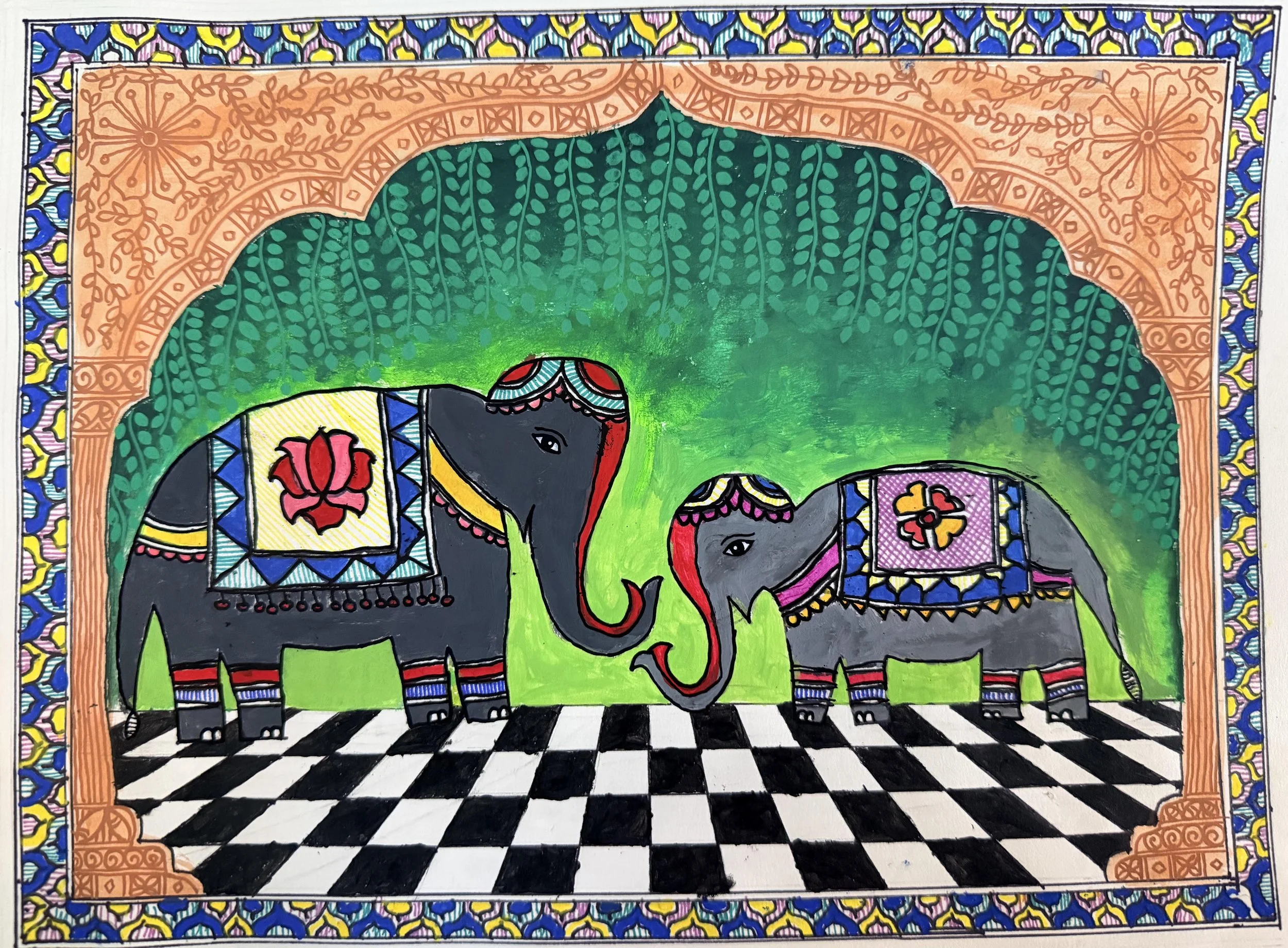
“My painting, titled Hasti Alaya, meaning "Abode of Elephants," shows a mother elephant and her calf together in a traditional scene, with a checkerboard floor, brown washed pillars in a vibrant green background. Elephants carry a connection to Lord Ganesha, also known as Gajaanana (God with elephant head) symbolizing the wisdom, protection, and strength.
The bright lotus patterns on their backs represent purity, and the bond between the mother and baby highlights sweetness, the warmth of family and togetherness during Ganesh Chaturthi.”
- Praanya
Ganesha and the Phases of the Moon
Varsha Subramanian
The Evergreen School
8th Grade
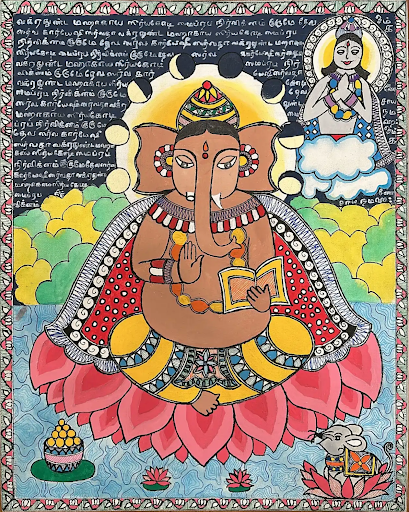
“My artwork, titled “Ganesha and the Phases of the Moon,” illustrates the story of Lord Ganesha and Lord Chandra, creating a meaningful connection to Ganesh Chaturthi. According to Hindu tradition, on the night of Ganesh Chaturthi, Ganesha was returning home after enjoying a feast when Mooshik (his mouse) stumbled, causing him to fall. Lord Chandra, the moon god, laughed at him, and Ganesha, angered by the mockery, cursed him to lose his light. However, he noticed that the humans were suffering without Chandra, so Ganesha lessened the curse, resulting in the moon waxing and waning, changing in shape and brightness. Through the connection between Ganesha and the moon, my artwork brings this story to life and celebrates the spirit behind Ganesh Chaturthi.”
- Varsha
The Beginning and End
Meera Sankar
Skyview Middle School
8th Grade
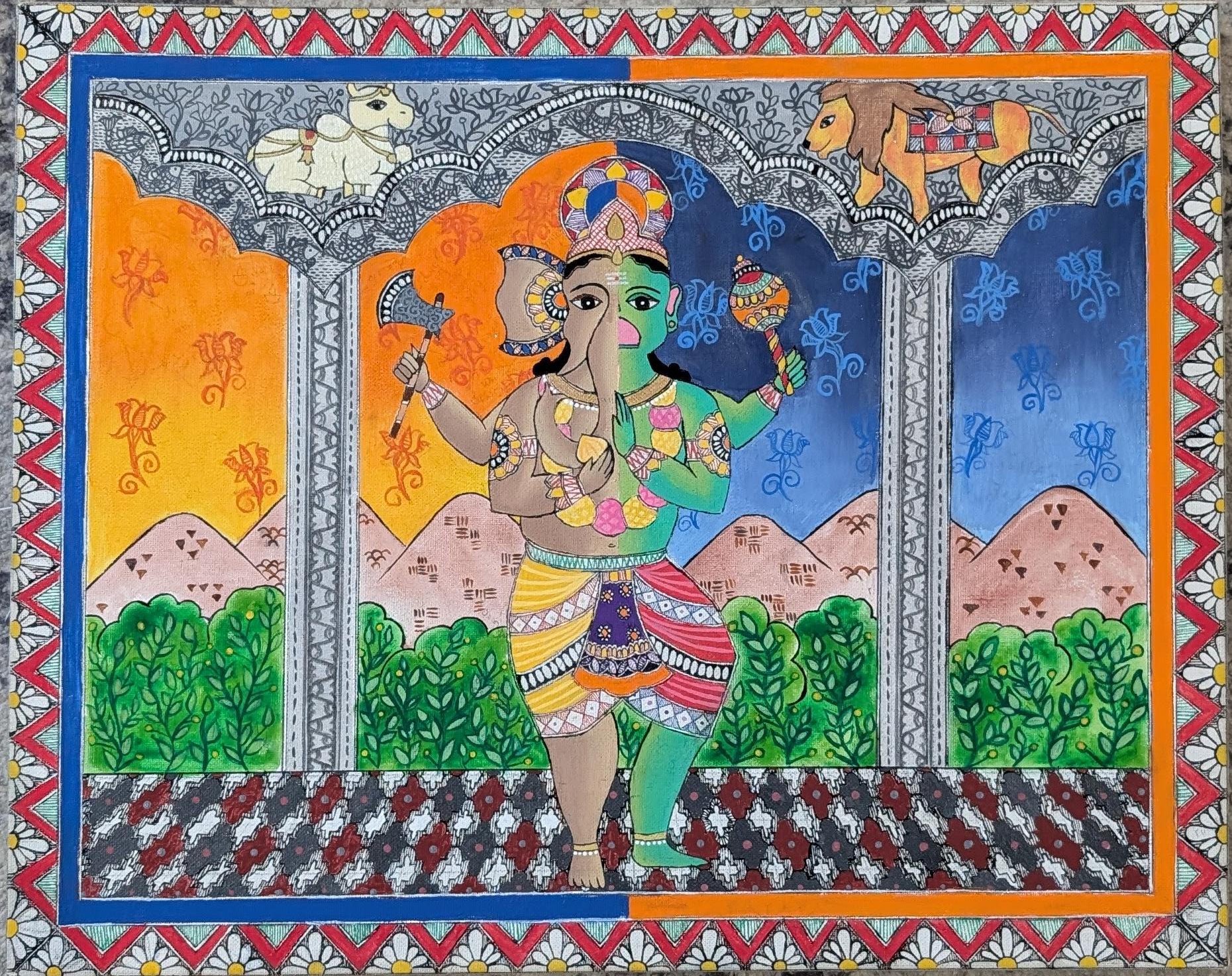
“My name is Meera Sankar, and my painting, titled “The Beginning and End,” depicts “Aadhyantha Bhagavan,” a Hindu deity in the form of half Ganesha and half Hanuman. Aadhyantha Bhagavan is a rare form of Lord Ganesha blended with Lord Hanuman, representing the beginning and the end. My artwork is modeled after how he is depicted at the Madhya Kailash Temple in Tamil Nadu, India. The two halves are merged, with distinct features of each deity visible, including their animal features; the weapons held on either side of the lord represent the combat that occurred for this deity to form.
Ganesha and Hanuman are both dressed in bright colors to highlight the two beings forming into one. The background of the temple represents the Madhya Kailash Temple, one of the only stone forms of this being. Lord Ganesha represents the beginning of time, while Lord Hanuman represents the end. The union of Aadi (beginning), which is Lord Ganesha, is revered as the remover of obstacles, while Anta (end), which is Lord Hanuman, represents immortality. The union of Aadi and Anta, hence the deity’s name, Adhyantha) represents the balance between wisdom and strength; it is believed that this form removes all ill effects.”
- Meera
