

What is Makar Sankranti?
By Aadya Bommineni, Aradhna Praveen, and Shriya Shaji
Read through our info section to learn about Makar Sankranti, its Tamil alternative Pongal, and some of the popular traditions celebrated throughout India to appreciate the harvest season!
Makar Sankranti
Makar Sankranti, also known as Pongal, is celebrated in India in January. It occurs at the end of the winter season and represents the harvest season. The festival is dedicated to the sun god Surya, appreciating the sun for providing light and energy to all living beings. In Sanskrit, “Sankranti” mean transition, and so the celebration revolves around the transition of seasons. Makar Sankranti is celebrated in India and Nepal, and it normally happens in January.
Pongal
Pongal is the Tamil version of Makar Sanskriti, lasting for four days, with similar themes about welcoming the new season and celebrating harvest.
The first day is Bhogi Pongal, where people clean their homes and host bonfires, and this day is for Lord Indra, God of rain.
The second day is Thai Pongal, the main day where Pongal, a porridge like rice dish, is made. The tradition is to cook the rice in a new dish and let it overflow. This is an offering to the Sun God Surya.
The third day is Mattu Pongal, dedicated to the cattle for their role in harvest.
The final day is Kaanum Pongal, for family gatherings and feasts.
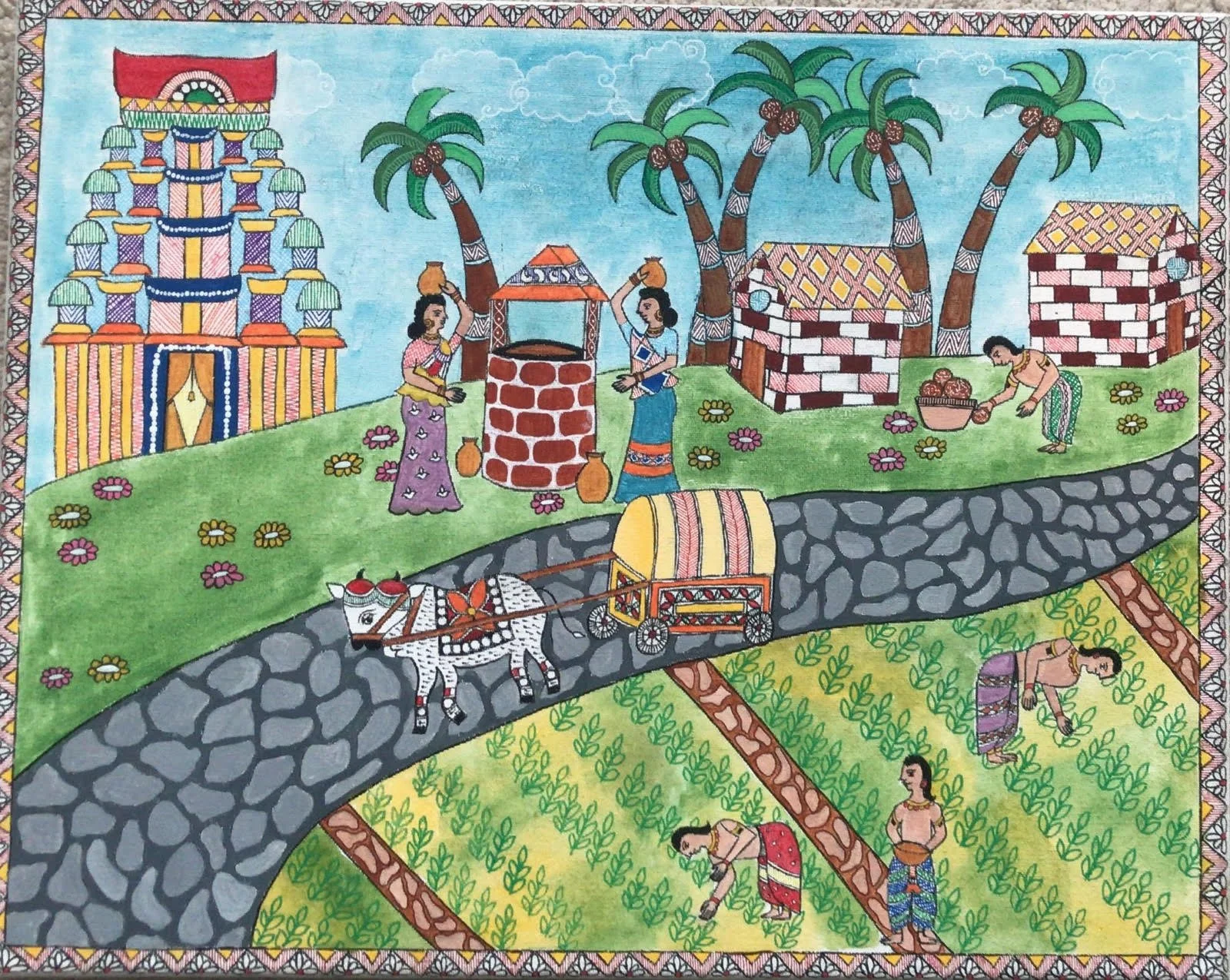
Village View by artist Oviya Raja, depicting multiple elements of Pongal, including the harvest and significance of cows.
Traditions
Around India, there are various traditions to celebrate Makar Sankranti. One tradition is taking dips in holy waters such as the Ganga or Yamuna Rivers, for purification and the removal of sins. Another fun and popular tradition especially in Gujurat is flying vibrant and colorful kites as a way of saying thank you to the gods for the new harvest season. Food is almost always a tradition, and so on Makar Sankranti, sweets made from sesame seeds and jaggery are prominent as they represent the sweetness and happiness in life.
