Stories Behind the Canvas: Art at Heart

by Aadya Bommineni, Aradhna Praveen, and Shriya Shaji


This month, we spoke to artists Anugraha Ganesh and Rasika Ganesh, who organized an art workshop with their family at the Shastri School in India. Scroll to learn more about their experiences teaching hearing-impaired children Madhubani art, and what they learned!


Q&A with Anugraha and Rasika

How did you come across this opportunity, and how did you decide to do an art-based workshop?

“We came across the opportunity through our grandmother who is a patron of the Shastri school for hearing impaired students. She has been associated with the school and we went for a visit and got the idea of doing an art workshop there as Deepti Designs always encourages such workshops as well.”


What were some parts that you prepared earlier, and some that you prepared later? Did you practice making the artwork beforehand?

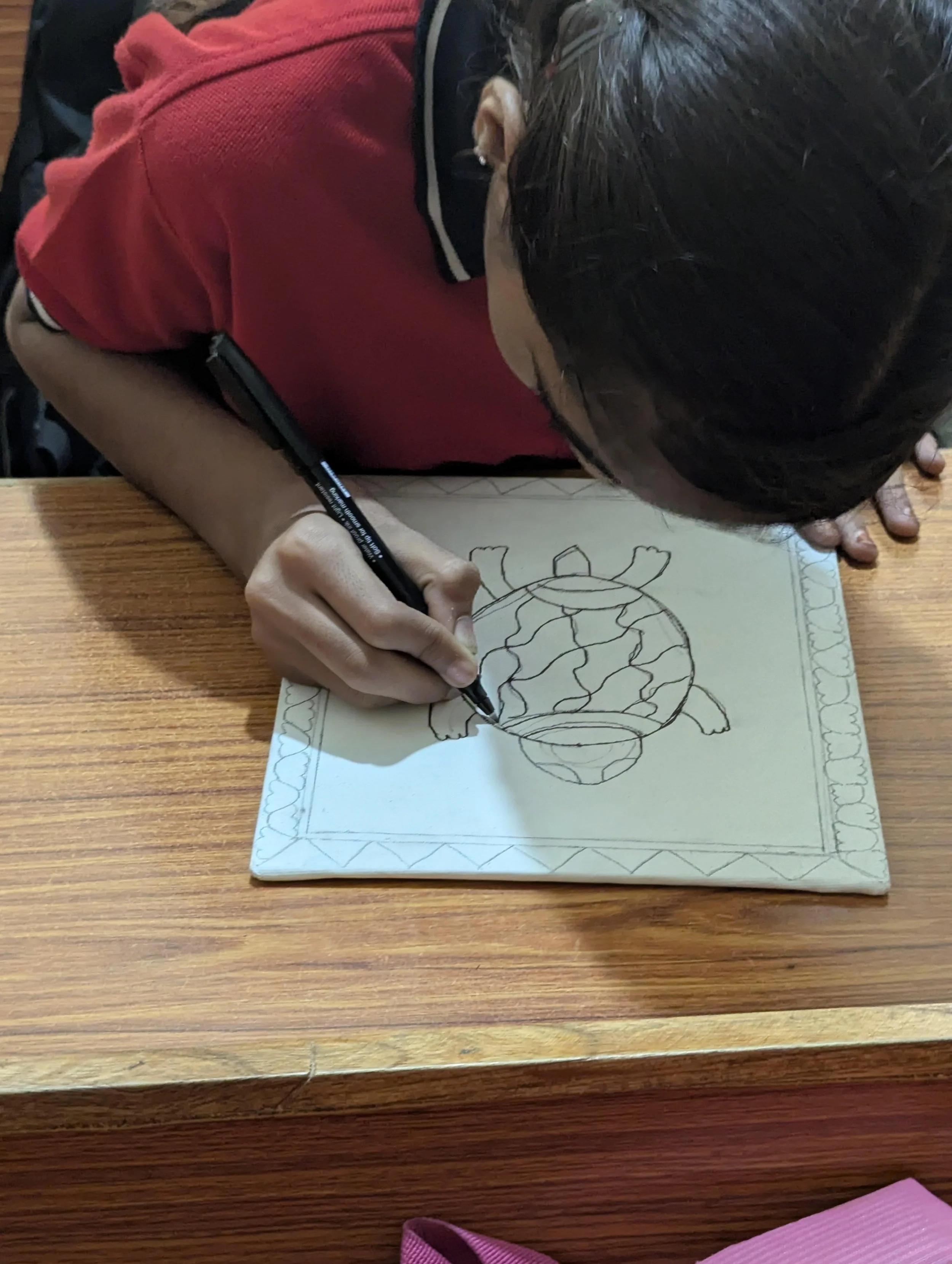
“We bought the canvases and got to work at home. We drew with pencil the border for every canvas and measured how big the main sketch would be. We also designed one to show how the end result of the project would look like. It was about 10 hours of work at home including buying the materials, drawing the border and measuring. We also pre sorted all the colors and materials for each child so it would be easy for distribution there.”


Were there parts of the workshop you, your sister, or parents may have had different ideas about? How did you come to an agreement?

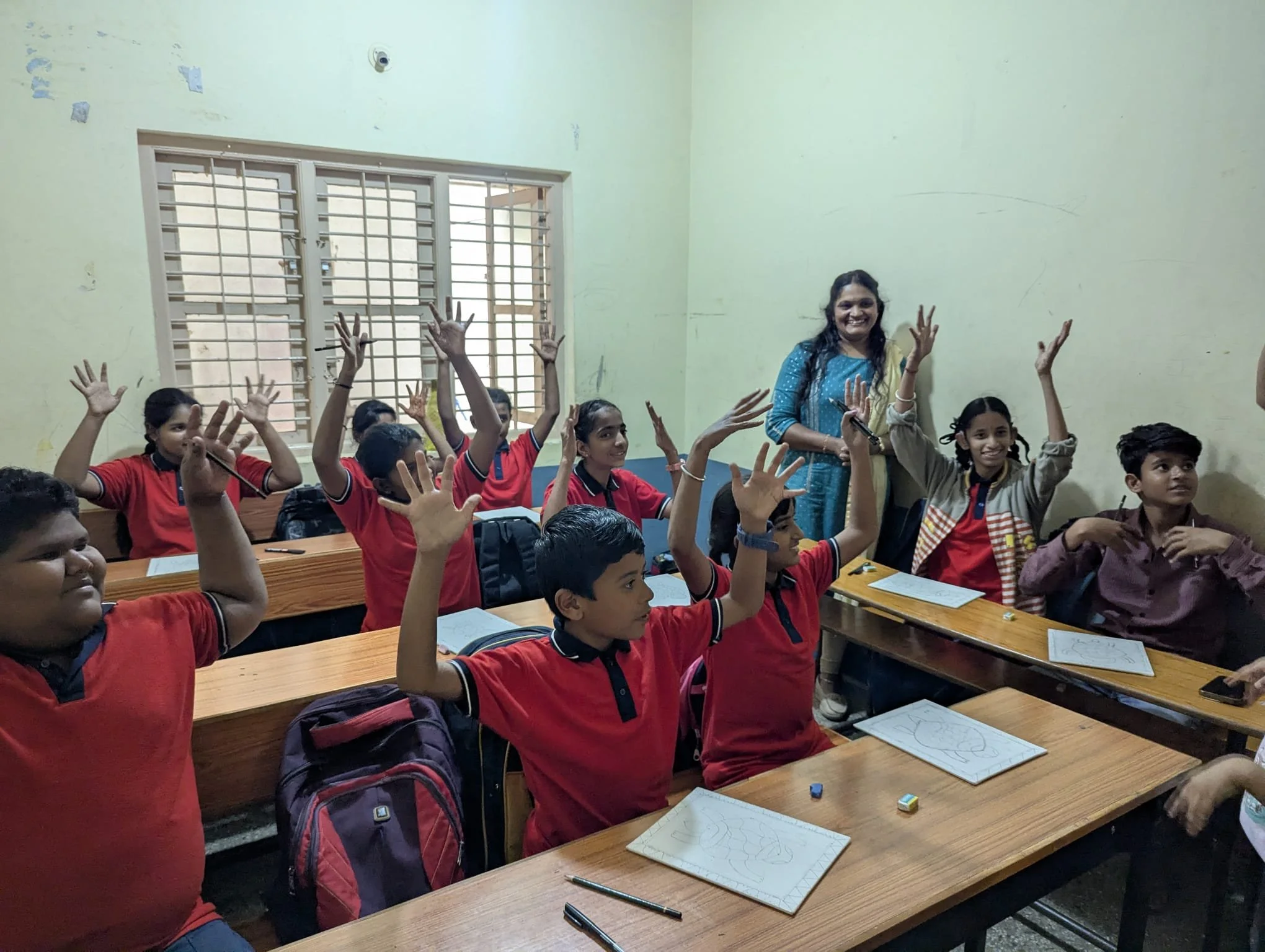
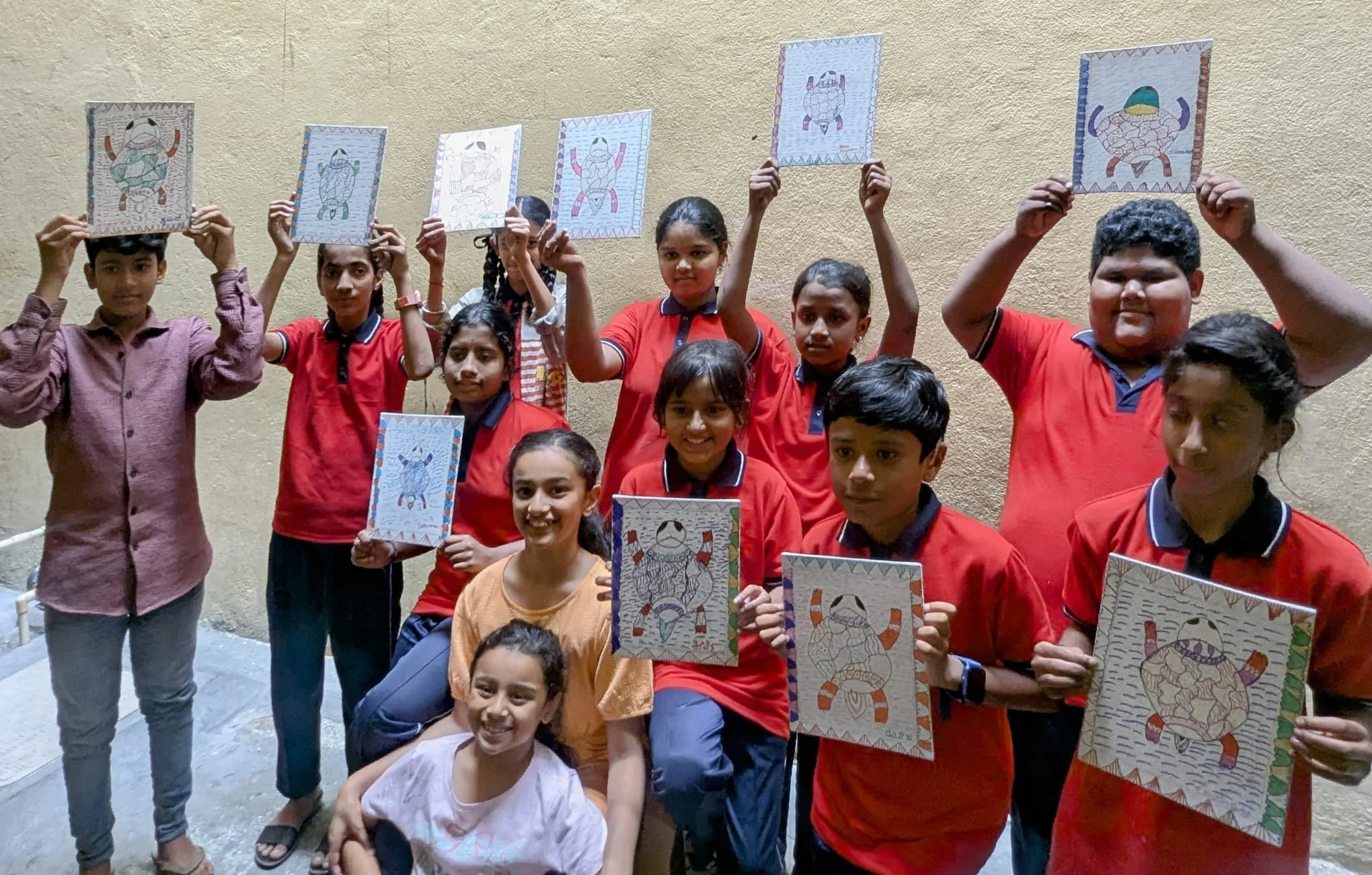
“We did have a few different suggestions about size of canvas, type of canvas and whether we should use paint or markers and how complex the project should be. We truly underestimated the abilities of the children there. It didn't seem as if they were doing Madhubani art for the first time. They were so good with their art and it was great to see they found a new way of expressing themselves.

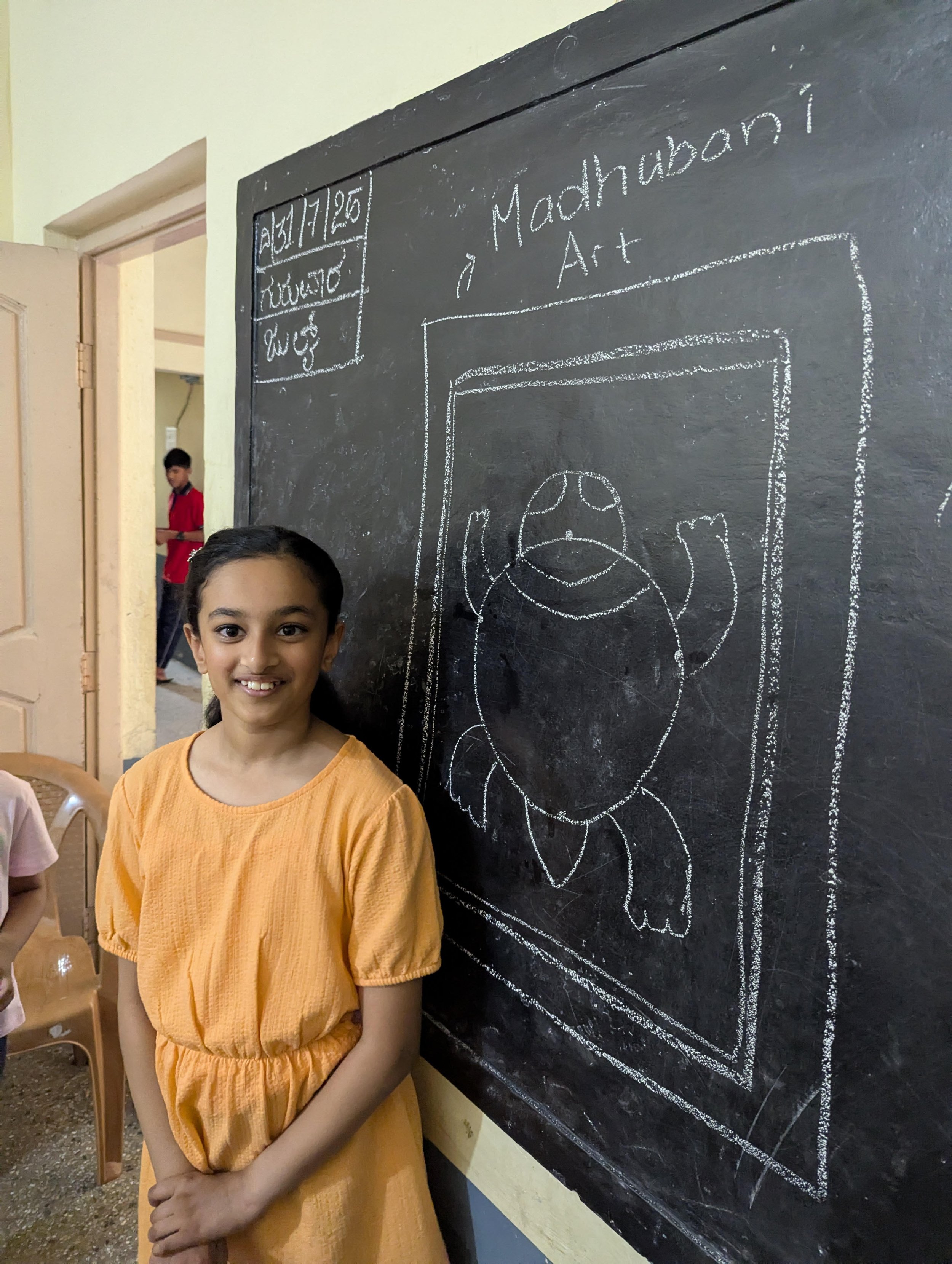
I [Anugraha] made the final call that we would make a turtle as the project as it would be cute and attractive to children and also had lot of scope for Madhubani art as well. Both my sister [Rasika] and I were given freedom to lead and decide. Of course my sister and I did have some disagreements, she wanted to do everything I was doing as well but I wanted to lead the project and make the final call. Finally, we divided our tasks and made peace.”


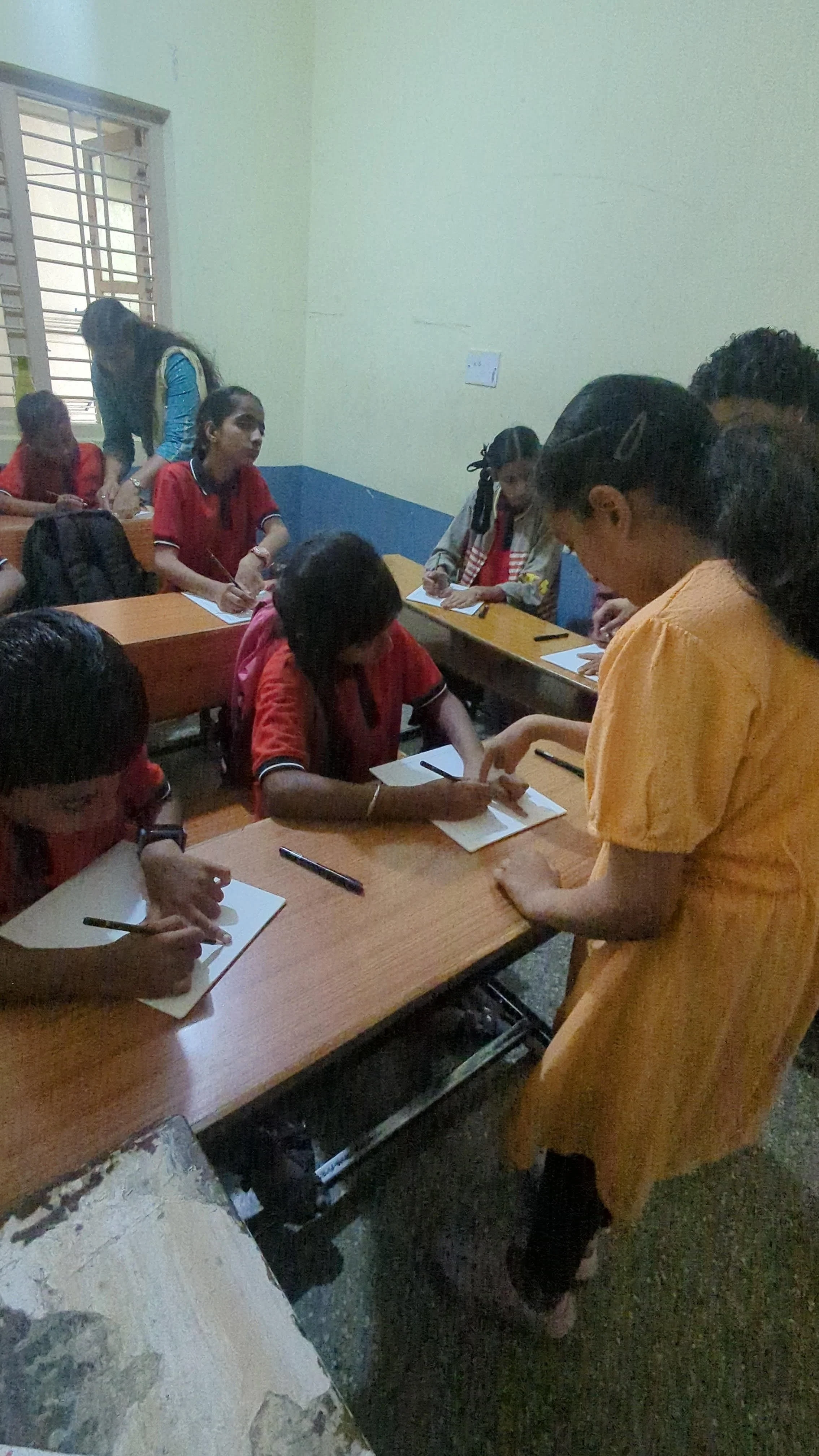
What were some of your favorite moments working with the kids during the workshop? What were their favorite parts?

“The whole workshop was such a great experience. It was very humbling to see these children very eager to do the art and we couldn't feel that they had any kind of challenges with understanding our instructions. They were so good when it came to following every step and bringing their painting alive on their canvas. Their teachers were also very helpful and we did the entire workshop as a family with our mother, grandparents and aunt all participating. It was so much fun interacting with students from India and getting to know their names and their personalities. They communicated with us in sign language and some of them even spoke about movies etc. Overall talking with the students was our favorite part of the workshop and the outcome of their project was very satisfying.”


What is some advice you would give to another student wanting to conduct a workshop, but who doesn’t know where to begin?

“An advice we would give a kid wanting to do such a workshop is to develop a giving mindset before starting the workshop as it takes a lot of time and effort. Gathering information, researching the right place for the workshop, working with the organization or school to come up with a date, time and duration and deciding on a budget and what type of project are all essential steps. Once you finalize these details then comes the step to design your project. First on a paper to see how much time it will take and practicing how to explain it to the students in a language they would follow is also important. For us this was a very humbling and life changing experience and we are sure it will be that way for everyone. So we highly recommend doing these workshops to all students. It was one of the most fulfilling experiences for us.”


Previous
Previous

Month 12: Makar Sankranti

Next
Next

Featured Paintings