Stories Behind the Canvas: SAAM Exhibition

By Shriya Shaji and Pehal Thacker

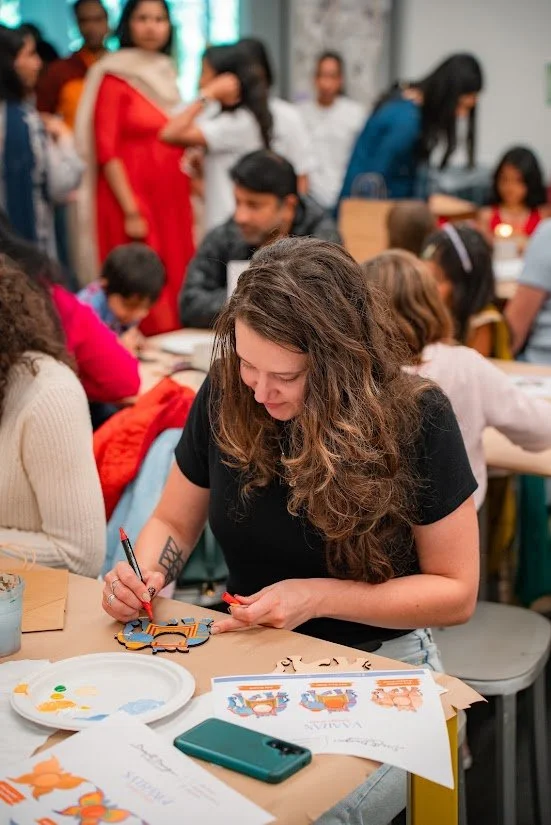
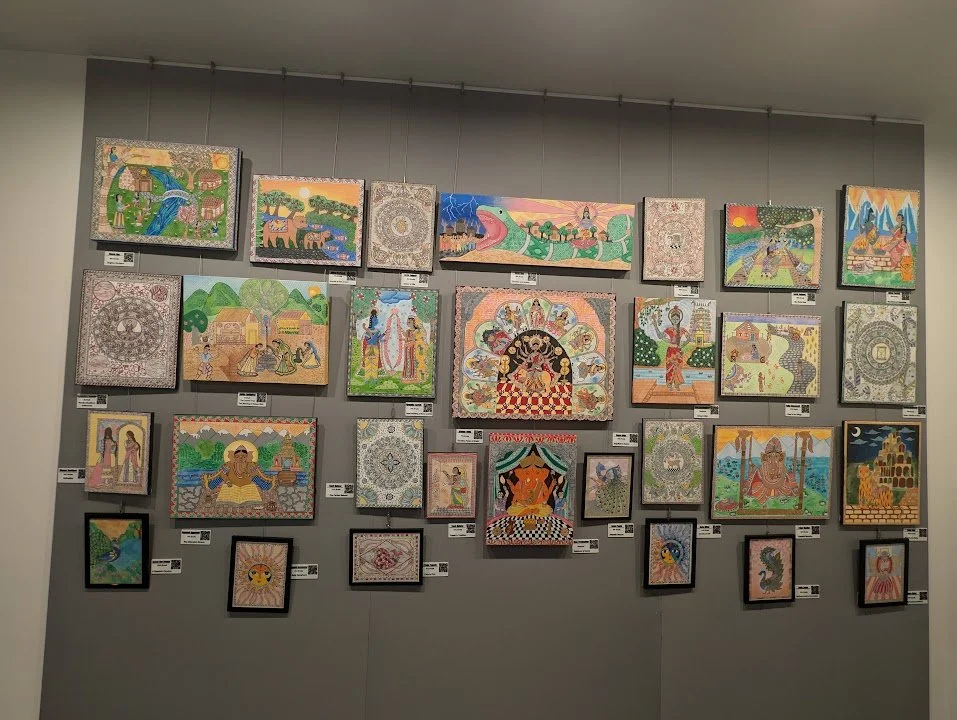
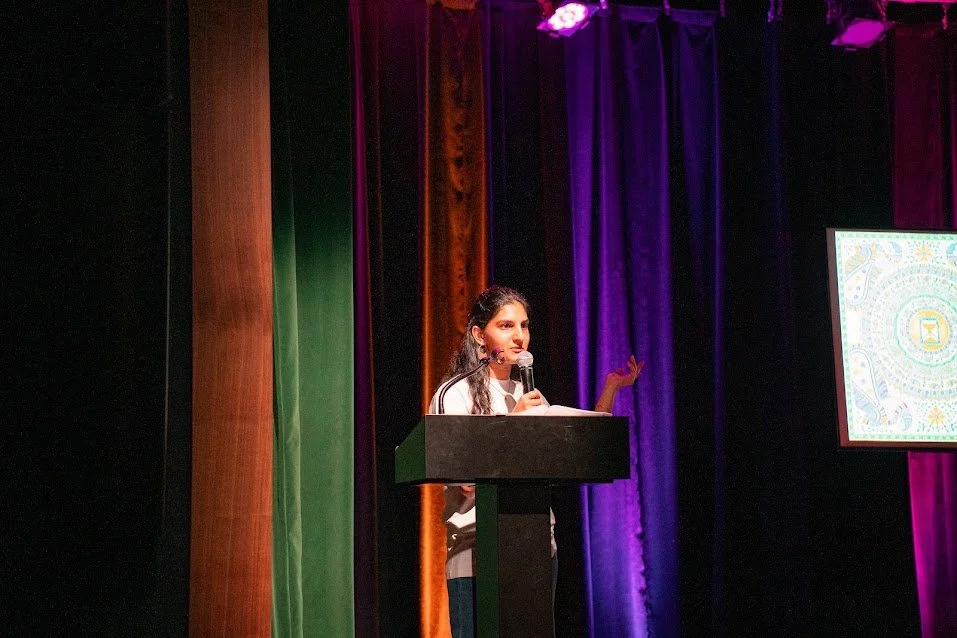
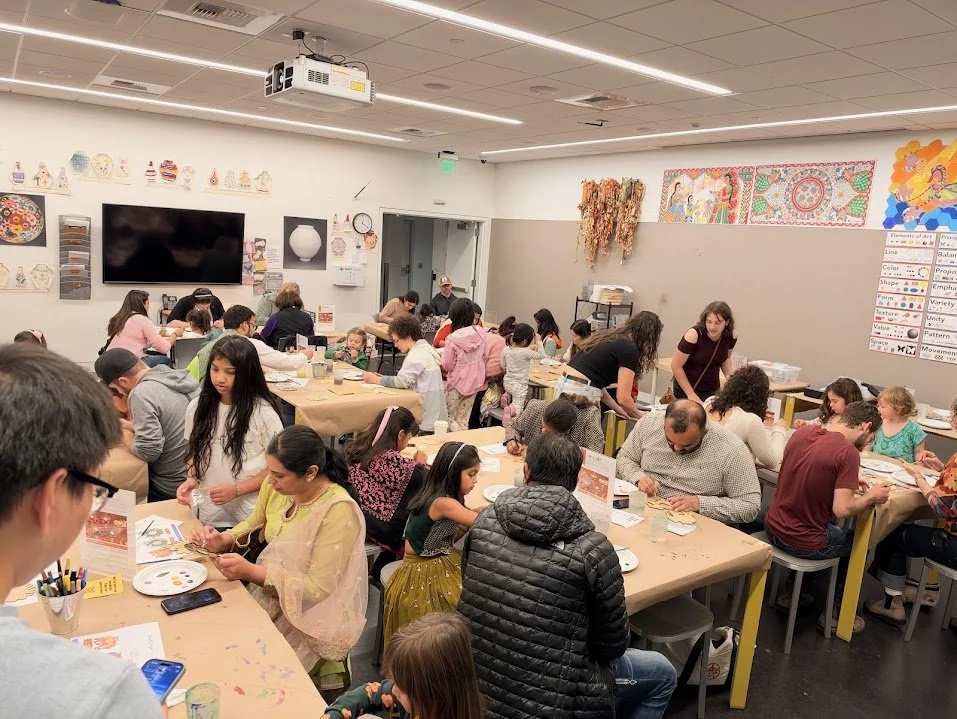
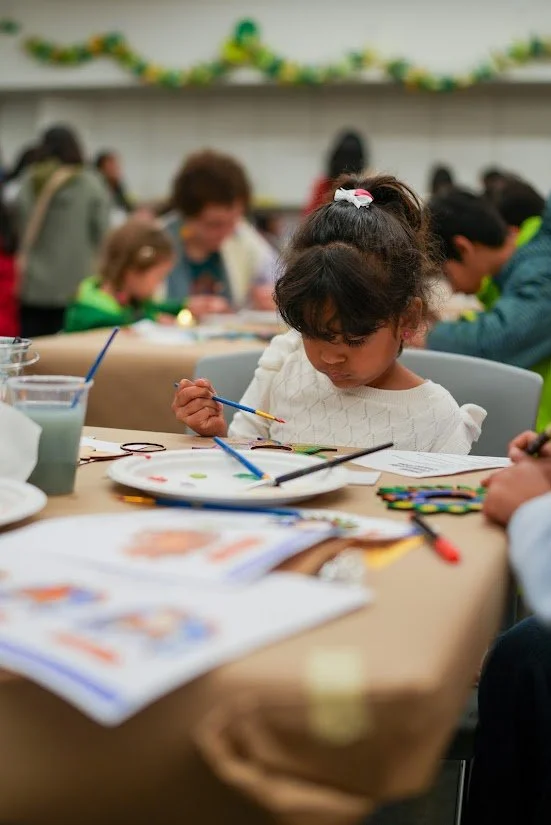
This month, we cover this year’s annual youth artist showcase at the Seattle Asian Art Museum (SAAM). The annual exhibition offered students of Deepti Designs the opportunity to showcase their artwork in a renowned museum, as well as share the context, choices, and research which took place alongside their artwork. Visitors explored student artwork and listened to youth artist presentations, connecting with our artists through the canvas and their words. Finally, visitors were invited to participate in an interactive Diwali art workshop, creating small pieces of art to take home for their own Diwali celebrations. To learn more, we spoke with Oumsri Ragavendhran, Oviya Raja, Anvi Dua, Snigdha Josyula, Anvi Babu, Abhay Bodapati, and Sanskriti Shukla, who served as educational studio and backstage coordinators in our showcase at the Seattle Asian Art Museum.
Q&A with Coordinators

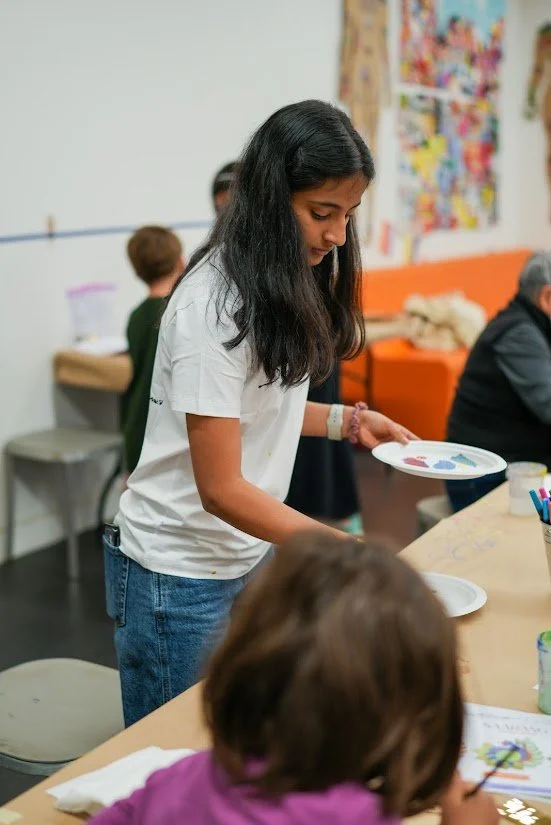
Abhay took on the responsibility of supporting workshop participants in creating a Diwali keepsake, by maintaining an inviting environment by organizing materials.

“I decided to take charge of washing the brushes people were done with and guiding everyone where to put their water cups and other art materials to get things under control.

For me the biggest part of the experience was figuring things out on the spot when it got hectic and then working hard during cleanup to pack everything up, take off the tablecloths, and make sure the space looked clean before we left.”

- Abhay Bodapati


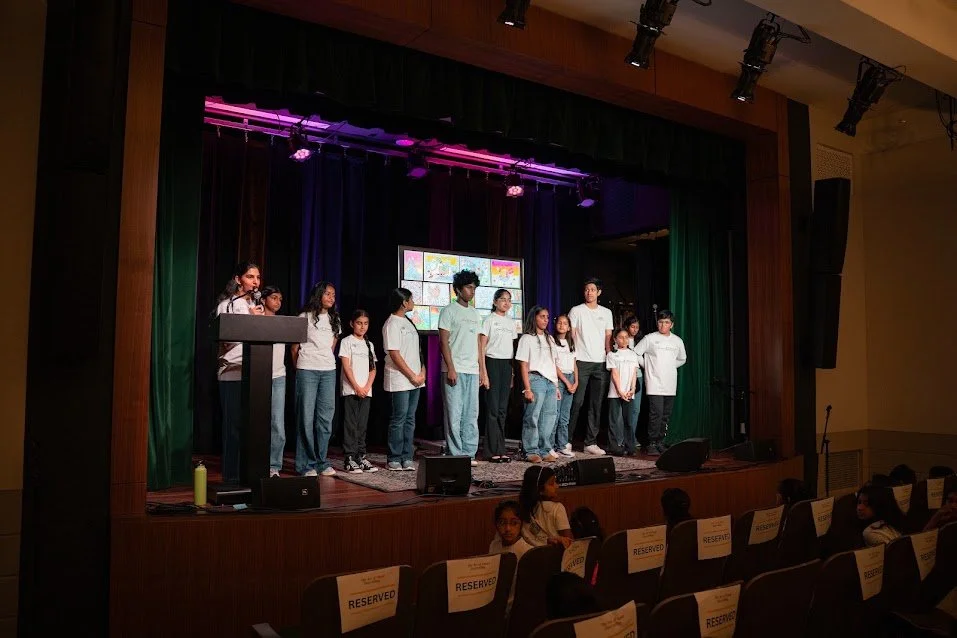
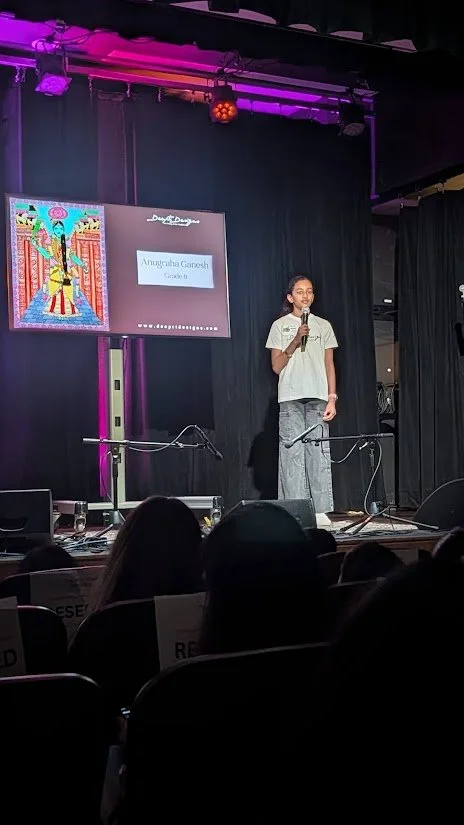
As a backstage coordinator for the student presentations, Anvi says one her favorite parts of being backstage was interacting with all the artists who presented their work.

“It was rewarding to coordinate backstage and help everything run smoothly. I enjoyed watching students present one after another, ranging from young children to experienced adults, all sharing their work.”

- Anvi Dua


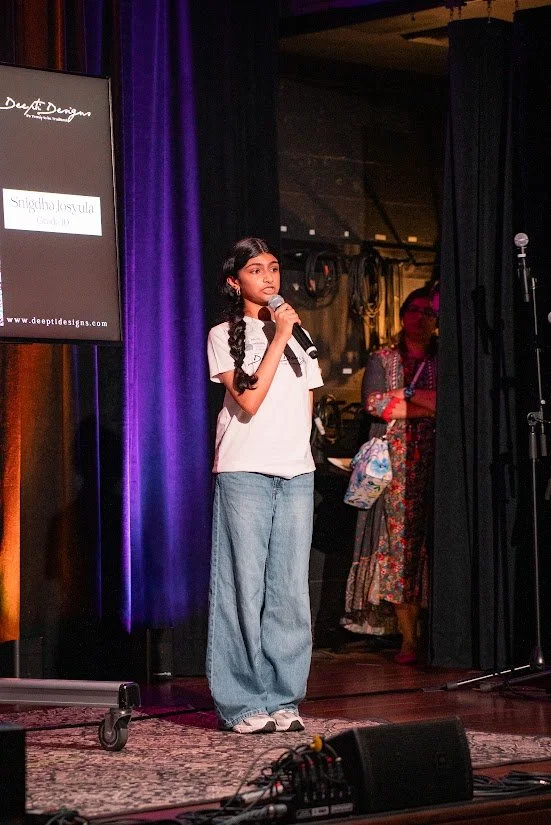
The showcase provided students with the platform to explain the history, the traditions, and the conversations which took place to create their artwork, through student presentations. Snighda recalls that presenting artwork to a wider audience allowed students to recognize the value of their heritage.

“The process empowers students by proving that their history is valuable and universally significant, at an establishment like SAAM. By presenting there, we transitioned from observers to advocates of our heritage, which requires so much confidence to do!”

- Snigdha Josyula


The confidence that Snighda notes was especially demonstrated among our younger artists, as Anvi recalls.

“I felt very proud of all the younger students, they were so proud of their culture and for some it was their first time on stage to such a large audience and they were doing so well!”

- Anvi Babu

The student presentations allowed for gallery visitors to inquire as to an artist’s choices. Abhay remembers a visitor inviting him to share his inspiration. He explained how the Pacific Northwest influenced his perspective.

“One of the coolest conversations I had was when someone in the audience asked me what inspired my artwork and I got to explain how the Pacific Northwest was my big inspiration. I enjoyed talking about the local nature here and how that influences the art I make.”

- Abhay Bodapati


Many gallery visitors expressed surprise, when they learned that some of the traditional artwork was created by elementary school students, and brought nostalgic memories of their childhood.

“I talked to so many people, and something that stood out to me was how impressed they all were when they had heard a kid did this, especially since some of the pieces are done by kids in elementary school. When I talked with some parents and older folks, they informed me how these pieces reminded them of their childhood and brought back fond memories for them of their time in India and how much it meant to them that the younger generation was practicing this art form and illustrating these stories.”

- Anvi Babu


In the gallery’s educational studio, Oviya introduced visitors to Madhubani art, some of which who had heard about Madhubani for the first time. Oviya expresses that she hopes to encourage students to discover their heritage, and understand how to preserve it.

“Guiding the educational studio at the SAAM show allowed me to introduce more people to Madhubani who had previously never heard of it while also encouraging younger students to explore and appreciate their cultural heritage. I want to show these students that our stories and traditions are worth preserving and sharing with others because of the joy they can bring out in people, and I want to give them a starting point to understanding how to do that.”

- Oviya Raja

Abhay adds,

“Opportunities like the SAAM showcase got students to inquire about their culture and learn things they may not have known. They learned to connect their life with the stories they're told and dive deeper into their culture to create beautiful paintings. Dozens of students also got the opportunity to present their paintings in front of a whole crowd, explaining what made them choose specific topics. Overall it is a fabulous way for students to learn about culture and ancestry.”

- Abhay Bodapati


The showcase provided students of all ages opportunities to practice leadership, such as communicating with patience and making decisions on the groups’ needs, says Sanskriti.

“Through the community workshop students can learn how to give directions or ask people to do something in an assertive, yet patient way, be able to keep their cool even when things get overwhelming, and organization especially in making decisions on how things are going to run according to the situation.”

- Sanskriti Shukla


As we wrap up the showcase, and recount the efforts of our student artists, coordinators and parents, we discussed with Oumsri what she was looking forward to seeing in the future. She reflected on how the event showcased the growth of our students as they gained confidence in engaging with our audience, during student presentations.

Looking back at this event, what did you most enjoy and what are you looking forward to seeing in upcoming years?

“I enjoyed listening to the speeches and q/a of the attendees. They did an amazing job and some of the presenters were my own students. It was inspiring for myself as a teacher to see their growth and hard work. They were able to tackle even the hardest questions and have a discussion with the audience, not simply a one word yes/no. In the future, I hope to see more students participating and sharing their experiences at the show. This event was only able to happen due to team work between all the parents, student volunteers, and Deepti Aunty. I really think we can continue making an impact and share the depth our artists' works brings to the community.”

- Oumsri Ragavendhran


Previous
Previous

The Story of Each Day of Navratri

Next
Next

Month 15: Navratri