

Featured Paintings
By Aadya Bommineni, Aradhna Praveen, and Shriya Shaji
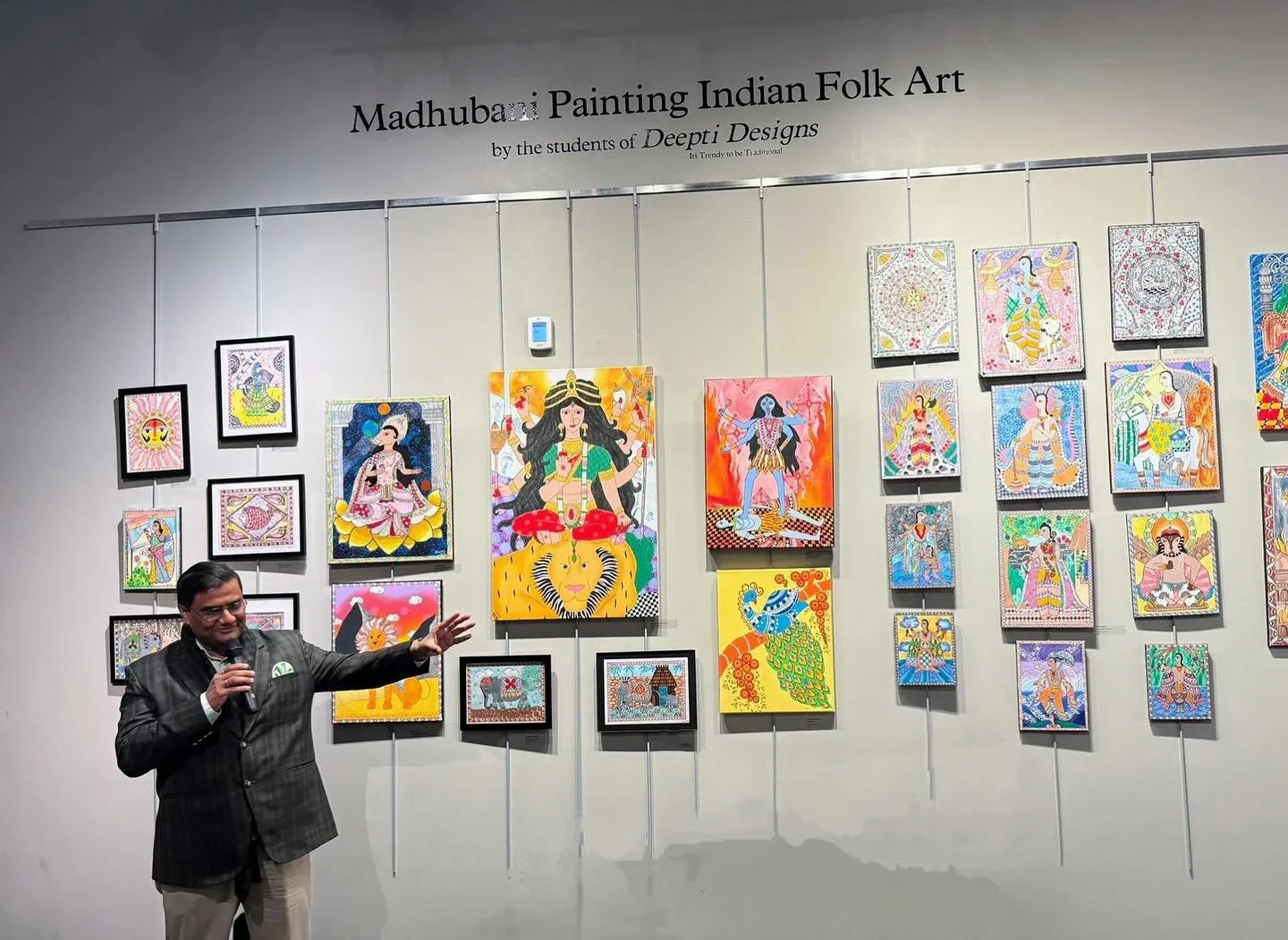
To honor Navratri, the annual nine day festival honoring the form of Goddess Durga, we feature artwork from artists Kriya Rajpal and Aadya Bommineni. Kriya shares her research including the tales behind the origin of Navratri as well as the significance of the auspicious event. Aadya shares her portrayal of the nine avatars of Goddess Durga and each aspect of her elaborate piece.
Enjoy and please support our fellow artists by leaving a comment!
Navratri: A Festival of Art, Energy & Inspiration
“Nine nights of color, dance, and devotion — that’s Navratri, one of India’s most loved festivals! At Deepti Designs, we see Navratri as a time of creativity. Just as artists bring their imagination to life, Goddess Durga embodies the power to create, protect, and transform. The word Navratri means “nine nights” with each night honoring a different form of Durga, known as the Navdurga. Each form represents a unique energy that guides us to be strong, kind, and creative.”
The Story of Goddess Durga
“According to Hindu scriptures, when the demon Mahishasura threatened the heavens, no god or goddess alone could defeat him. So, all the gods combined their divine powers to create Goddess Durga. She is the warrior goddess with ten arms, each holding a weapon gifted by the gods. Goddess Durga rode into battle on her lion, symbolizing courage and determination, and fought Mahishasura for nine days and nights. On the tenth day, known as Vijayadashami and Dussehra, she triumphed, showing that good always conquers evil. Her story of balance, strength and the power of good intentions are lessons we can all carry into our lives.”
How India Celebrates Navratri
“Navaratri is celebrated differently across India and that’s what makes it so colorful and diverse!
Gujarat: People whirl in circles during Garba and Dandiya Raas (traditional folk dances), dressed in bright reds, yellows, and blues.
West Bengal: Grand Durga Puja (prayers, feasts and other cultural events) pandals fill the streets with lights, music, and devotion.
South India: Families create Golu displays which are beautiful arrangements of dolls and figurines that tell stories of gods, goddesses, and life lessons.
North India: Ram Leela performances retell the story of Lord Rama’s victory over Ravana.”
- Kriya
Maa Shakti
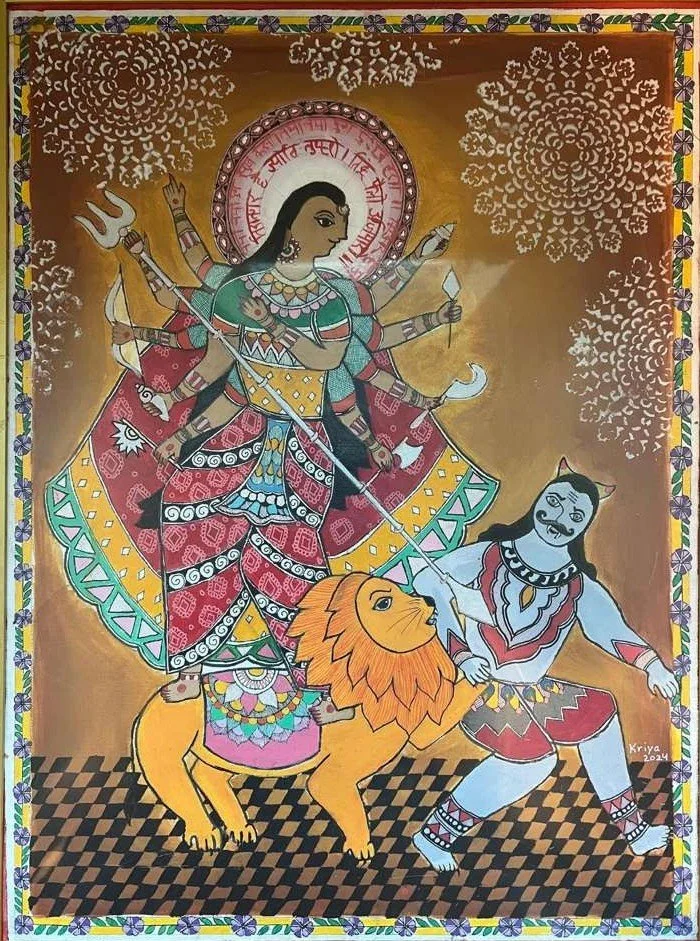
Kriya Rajpal
Skyview Middle School
7th Grade
“My artwork is inspired by the traditional Madhubani (Mithila) painting style from India, known for its bold colors, detailed patterns, and storytelling. In this piece, I chose to depict Maa Durga, riding her tiger who is a symbol of bravery and confidence. She is shown spearing the demon, which represents the idea that truth and goodness can overcome fear and negativity. The bright colors, and the intricate designs all come from Madhubani traditions that have been carried on for centuries, by women, the founders of the art style. By using this style, I hope to honor that cultural history while expressing a story about strength and resilience.
Through this project, my goal was to show how art can connect mythology, culture, and personal values. I hope viewers can feel the energy of goddess Durga and the message that courage can defeat even the biggest challenges.”
- Kriya
Adi ParaShakti
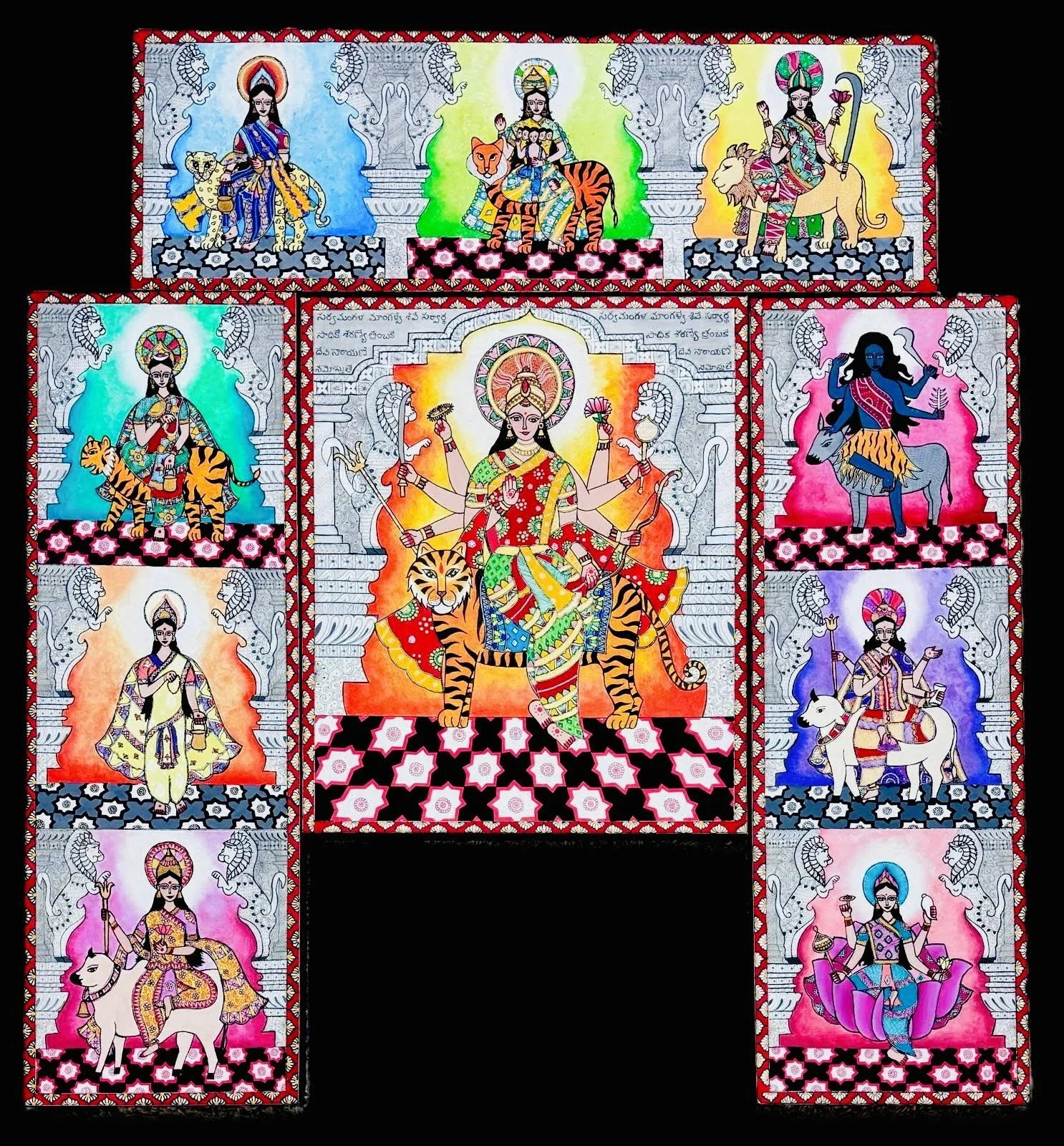
Aadya Bommineni
Interlake High School
9th Grade
“My name is Aadya Bommineni, and this is my fourteenth art piece, Adi ParaShakti. The center canvas showcases the goddess Adi ParaShakti, also known as the mother goddess, who symbolizes the ultimate power and energy of the universe. Surrounding Adi ParaShakti are the Nava Durga, the nine different incarnations of the divine goddess, including Shailaputhri, Brahmacharini, Chandraghanta, Kushmanda, Skandamata, Katyayani, Kalaratri, Mahagauri, and Siddhiratri. Each Devi has a unique significance in the story of Adi ParaShakti, where goddess Parvati undergoes a celestial transformation of avatars, known as the Navdurga, and reaches her tenth and most powerful form, Adi ParaShakti, when she kills the monster Mahishasura. To describe the uniqueness and significance of each Devi, I created a respective marble background effect for each goddess. To maintain a uniform temple architecture throughout the piece, I incorporated intricate pillar designs that include lions, which are Goddess Durga’s vehicle, and a floor design resembling repeating chakras. I was inspired to create this artwork after playing the role of young Katyayini in a show in my childhood. This painting was an opportunity for me to showcase the different avatars of Goddess Durga in my own creative way. Hearing the stories of the fearless warrior goddess inspired me to depict a cultural symbol of strength and power through colors and brush strokes carrying so much significance. I hope you enjoyed learning about this painting as much as I enjoyed creating it!”
- Aadya
